

Managing Cleaning Crews During Dubai’s Peak Season: How Ride-On Machines Reduce Human Error
- Read Time: 4 mins
An in-depth look at how Dubai facilities handle peak-season cleaning pressure, reduce human error, and improve consistency by integrating ride-on machines into daily operations.
Dubai’s busiest periods, driven by international exhibitions, seasonal tourism, and constant commercial activity, put real pressure on facility management teams. In these months, cleaning is no longer something that runs quietly in the background. It becomes a frontline responsibility, closely tied to safety, public image, and regulatory expectations. Facilities that once relied mostly on manpower often begin to feel the pressure during these periods. Long shifts wear people down. Not every crew has the same level of experience, and tight schedules make it harder to keep results consistent. This happens even in a market where advanced cleaning equipment in Dubai is easy to find. As expectations rise, mistakes become harder to overlook, which forces organizations to take a closer look at how cleaning teams are arranged, supervised, and supported in everyday work.
The Hidden Cost Of Human Error In Peak Operations
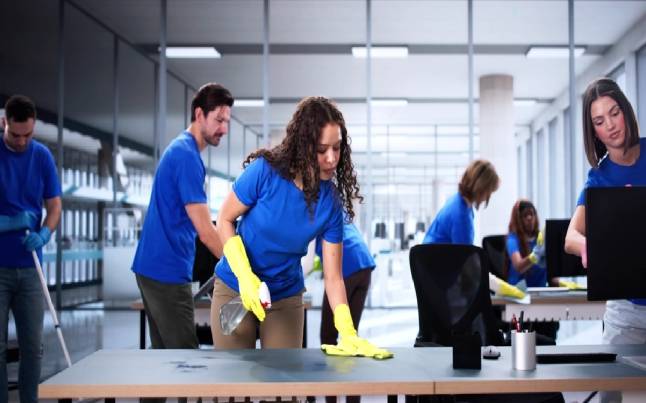
Human error in cleaning is rarely dramatic, but its cumulative effect is measurable. Missed zones, inconsistent chemical dilution, uneven floor coverage, and rushed procedures compound across large facilities. Studies in facilities management analytics indicate that manual cleaning teams can leave up to 12–18% of high-traffic floor areas inadequately cleaned during peak shifts, primarily due to fatigue and time compression. In Dubai’s climate where dust ingress is constant and footfall can triple overnight these gaps translate into higher slip risks, accelerated surface wear, and reputational damage.
Moreover, peak season often requires onboarding temporary staff, increasing variability in training quality and procedural adherence. Even experienced supervisors struggle to maintain consistency when teams rotate frequently across shifts and zones.
Why Scale Breaks Traditional Cleaning Models
Manual cleaning scales linearly: more space demands more labor, more supervision, and more time. Peak season disrupts this equation. When facilities double operating hours or host continuous events, linear scaling becomes inefficient and error-prone. Supervisors spend disproportionate time correcting mistakes rather than optimizing workflows.
Operational data from large commercial facilities in the GCC shows that error correction and re-cleaning can consume up to 22% of total labor hours during peak periods. This inefficiency is not caused by lack of effort but by the biological limits of human endurance and attention span under sustained pressure.
Ride-On Machines As Error-Reduction Systems
Ride-on cleaning machines shift the cleaning model from labor-centric to system-centric execution. Unlike manual methods, these machines deliver standardized brush pressure, controlled water flow, and consistent suction across every pass. When deployed correctly, an industrial floor scrubber dryer machine does not “work harder” under pressure it works identically, hour after hour.
From an operational analytics perspective, this consistency matters more than speed. Facilities using ride-on machines report coverage accuracy rates above 98%, significantly reducing variability between shifts. The machine becomes the constant, while the operator transitions from physical laborer to process controller.
Cognitive Load And Operator Performance
One overlooked benefit of ride-on machines is cognitive load reduction. Manual cleaning requires continuous micro-decisions how much pressure to apply, when to re-wet, which area to revisit. Under peak-season stress, these decisions degrade. Ride-on machines automate these variables, allowing operators to focus on navigation, safety awareness, and anomaly detection.
Research in human–machine interaction shows that reducing physical strain improves situational awareness by up to 30%. In practical terms, operators are more likely to notice spills, obstructions, or unusual surface conditions before they escalate into incidents.
Data, Accountability, And Measurable Control
Modern ride-on machines increasingly generate operational data run times, coverage maps, water usage, and maintenance alerts. During peak season, this data becomes a management asset. Supervisors gain objective visibility into what was cleaned, when, and how consistently. This reduces reliance on manual checklists and subjective reporting, which are particularly vulnerable during high-pressure periods.
Facilities leveraging machine-generated cleaning data report faster audits, fewer compliance disputes, and improved alignment between operational teams and management expectations.
Strategic Workforce Optimization
Ride-on machines do not eliminate human roles; they elevate them. By reallocating physical workload to machines, facilities can deploy fewer staff across larger areas while preserving quality. Human effort shifts toward detailing, inspection, and responsive cleaning tasks where judgment and adaptability matter most.
In Dubai’s competitive facilities landscape, this hybrid model balances efficiency with accountability, allowing organizations to meet peak demand without overextending their workforce.
Dubai’s peak season tends to reveal where traditional cleaning approaches fall short. Mistakes that might be manageable at other times quickly become expensive when operations scale up and timelines tighten. Ride-on machines are not only about working faster. Over time, they help keep cleaning consistent, especially during long shifts when people naturally slow down or lose focus. They also reduce physical strain, which makes a difference over the course of a full day. In places where accuracy matters as much as how things look, reducing human error is not about replacing staff. It is about setting up the work in a way that helps people do their jobs properly.