

Manual Cleaning vs Mechanized Cleaning in UAE Malls: Cost, Time, and Hygiene Impact
- Read Time: 4 mins
An expert comparison of manual and mechanized cleaning in UAE malls, examining cost control, productivity, hygiene performance, and the role of modern cleaning equipment.
In the UAE’s premium retail environment, cleanliness is not a back-of-house activity; it is a direct contributor to brand perception, tenant performance, and customer safety. Consider the scale: Dubai Mall recorded 111 million visitors in 2024, while Mall of the Emirates welcomed more than 40 million visitors in 2024 numbers that translate into constant abrasion, spills, dust ingress, restroom demand, and high-touch hygiene pressure across operating hours, supported by cleaning equipment UAE standards across modern facilities.
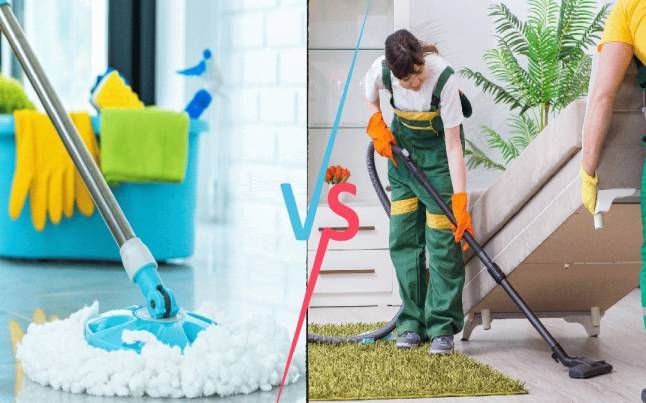
For mall operators and facility leaders, the core question is no longer “Do we clean enough?” but “Are we cleaning intelligently?” In practice, that means evaluating manual cleaning and mechanized cleaning not as rivals, but as complementary systems each with distinct impacts on cost control, time efficiency, and hygiene outcomes.
What Manual And Mechanized Cleaning Really Mean In A Mall Context
Manual cleaning relies on trained staff using traditional tools (mops, brushes, buckets, microfiber systems). It remains indispensable for precision work: washroom detailing, spill response, escalator edges, food court spot-cleaning, corners, and high-touch disinfection where technique and dwell time matter.
Mechanized cleaning uses equipment engineered for consistency at scale auto scrubber dryers, sweepers, industrial vacuums, steam systems, and pressure washers. The advantage is repeatable performance across long corridors, atriums, entrances, car parks, and large-format flooring where speed, uniformity, and fast drying are operational priorities.
At Al Nojoom Cleaning Equipment, our approach is practical: we support both methods, but we see mechanization as the operational backbone for modern malls because large-area cleaning is where time, labor, and consistency are most measurable.
Upfront Price Vs Lifetime Operating Reality
A common budgeting trap is comparing labor cost today against equipment cost today. In mall operations, what matters is the total cost of cleaning over time.
Manual cleaning can appear economical until hidden costs accumulate: rework due to uneven outcomes, supervisor overhead, staff fatigue, higher chemical/water usage from inefficient application, and scheduling pressure during peak hours. Meanwhile, the UAE’s broader facility management market is expanding rapidly, reflecting heightened expectations and operational complexity; one market analysis estimates USD 19.2 billion in facility management revenue in 2023, with strong growth projected through 2030.
Mechanized cleaning involves capital expenditure, but it typically reduces ongoing labor hours and improves predictability. Equipment also improves standardization, enabling cleaner audits, documented coverage, and planned maintenance instead of reactive firefighting. Put simply, mechanization turns cleaning from a variable cost into a controlled process.
Time And Productivity
In UAE malls, time is not an abstract KPI it determines whether cleaning supports the customer experience or disrupts it.
Industry workloading references frequently show meaningful differences in production rates. For example, one ISSA-based calculation cited in facilities management guidance illustrates a manual flat-mop rate of ~5,355 sq ft/hour in a standard scenario. By comparison, a sample cleaning-times report using ISSA benchmarks lists an automatic 24" walk-behind scrubber at ~8,357 sq ft/hour, often aligned with floor scrubber dryer machine productivity expectations in large-format retail.
That gap matters because malls don’t clean once per day they clean continuously. Higher productivity allows:
- faster turnarounds pre-opening and post-peak,
- better coverage without increasing headcount,
- reduced “wet floor” exposure due to scrubber-dryer recovery systems,
- more time for detailed tasks that truly require manual skill.
- Hygiene Outcomes: Visible Clean Vs Verified Clean
Hygiene in malls is judged in two ways: what visitors see and what operations can defend. Manual methods are excellent for detailed hygiene, particularly on high-touch points where technique, friction, and correct disinfectant dwell time drive results.
Mechanized cleaning strengthens hygiene by delivering consistent removal of embedded soils on large surfaces critical in the UAE, where sand and fine dust migrate indoors and degrade flooring if not managed effectively. Mechanization also supports safer, more repeatable application of chemicals and water volumes, reducing variability between shifts.
Importantly, Dubai’s regulatory ecosystem includes published technical guidance on cleaning and disinfection in the built environment, reinforcing the expectation of structured protocols rather than ad-hoc practices.
A Hybrid Model That Matches Mall Reality
The highest-performing mall programs do not choose “manual or mechanized.” They build a hybrid workflow:
- Mechanized: daily and intraday floor maintenance in corridors, atriums, entrances; car parks and loading zones with sweepers and pressure systems.
- Manual: high-touch disinfection, washroom detailing, spill response, edges/corners, tenant interface points, and final presentation finishing.
- Training + uptime: operator training, correct pads/brushes per floor type, preventive maintenance, and machine selection aligned to traffic patterns.
This is where equipment strategy becomes operational strategy. The right machine (walk-behind vs ride-on; cylindrical vs disc; pad selection; recovery performance) can materially change safety, appearance, and labor deployment.
In today’s UAE mall environment, where footfall reaches tens of millions annually and expectations for hygiene are uncompromising, mechanized cleaning is no longer a “nice-to-have.” It is the most reliable route to consistent outcomes at scale especially when integrated with skilled manual detailing where it matters most.
At Al Nojoom Cleaning Equipment, we help mall operators and cleaning teams design practical, measurable cleaning systems combining equipment, training, and workflow planning to reduce total cost, improve productivity, and elevate hygiene performance across every zone of the property.